Monitor regulatory guidelines that directly impact the operation, expansion, and competitiveness of data centers in Brazil.
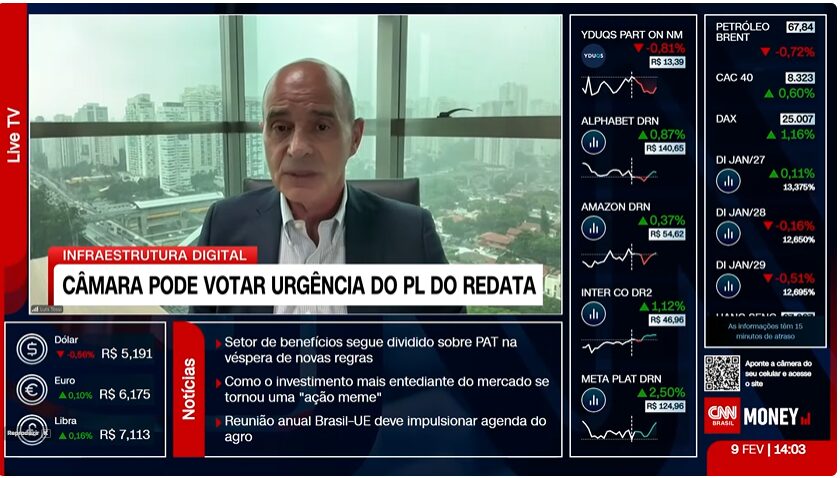
A Associação Brasileira de Data Centers (ABDC) esteve em destaque na CNN Money, com a participação de Luis Tossi, Vice-Presidente da ABDC e Diretor Comercial da Edgefy, em entrevista sobre os rumos do setor de infraestrutura digital no país. Durante a conversa, Luis Tossi ressaltou a importância do ReData – Regime Especial de Tributação para […]
Monitor regulatory guidelines that directly impact the operation, expansion, and competitiveness of data centers in Brazil.
We value collective experience and resources to identify opportunities, guide regulatory principles, and drive innovation in digital infrastructure.
The Regulation Working Group of the Brazilian Data Center Association (ABDC) was created with the purpose of bringing together sector operators and specialized law firms to discuss, propose, and monitor regulatory guidelines that directly affect the operation, expansion, and competitiveness of data centers in Brazil.
The group’s work aims to ensure that regulation keeps pace with technological evolution and the growing importance of data centers in Brazil’s digital economy, promoting legal certainty, predictability, and innovation.
Through a collaborative and technical approach, the Regulation Working Group strengthens ABDC’s institutional role as a qualified interlocutor between the sector and public authorities, contributing to the construction of a more modern, balanced, and favorable regulatory environment for the sustainable development of the country’s digital infrastructure.
Theme: Electric Sector Reform
Status: Under discussion in the National Congress
Provisional Measure 1300/2025 addresses the modernization of the Brazilian electric sector and has a direct impact on the data center industry, especially through amendments proposing the recognition of data centers as special loads, with the right to tariff incentives linked to the use of renewable energy.
Why does this matter?
Energy accounts for up to 50% of a data center’s operational costs.
The amendments propose reducing charges for centers that use 100% renewable energy.
What ABDC advocates:
Incentives for the use of clean and efficient energy.
Legal certainty and regulatory stability to attract investments.
Equal treatment across different models (colocation, edge, hyperscale).
With the cleanest electricity matrix among major global economies, Brazil can convert renewable energy into digital value — and position itself as a global hub for data and artificial intelligence. ABDC is closely monitoring the measure’s progress and actively engaging with Congress to ensure a favorable environment for the sector’s sustainable growth.
Theme: Industrial Policy | Export Incentives | Digital Infrastructure
Status: Under discussion in the National Congress
Edited in July 2025, Provisional Measure 1307 establishes guidelines to strengthen Export Processing Zones (ZPEs), aiming to attract productive investments and increase Brazil’s participation in global value chains. Among its key provisions, the MP requires that electricity used in new data centers installed in ZPEs must come from renewable sources.
Why does this matter?
The MP addresses tariff exemptions for purchasing data center equipment and initiates a debate on renewable energy use for these services.
The renewable energy requirement aligns incentives with environmental commitments already adopted by international operators and major tech companies.
The measure may boost the decentralization of digital infrastructure, fostering the installation of data centers in regions with strong renewable energy potential.
What ABDC advocates:
ABDC argues that including data centers in ZPEs must be guided by clear principles ensuring competitiveness, sustainability, and legal certainty.
On sustainability with competitiveness, ABDC supports renewable energy use as a condition for accessing ZPE benefits — aligned with ESG global commitments and reinforcing Brazil’s positioning as a green data and innovation hub.
Regarding digital export incentives, ABDC proposes that cloud computing, hosting, and AI services provided to foreign companies be formally recognized as export activities — essential for legal framing and consolidating data centers as exportable service hubs.
On technological decentralization, ABDC suggests public policies to encourage installing data centers in regions with abundant renewable energy, promoting regional balance and leveraging capacity beyond major urban centers.
On legal and operational certainty, ABDC supports creating a clear regulatory regime specifically for data centers in ZPEs, avoiding overlapping governmental obligations. Regulatory predictability is crucial for enabling long-term, capital-intensive investments.
ABDC will continue monitoring the progress of MP 1307 in Congress and will contribute technically to ensure the proposed benefits effectively reach digital infrastructure operators committed to the energy transition and the digital economy of the future.
Theme: Legal Framework for Artificial Intelligence
Status: Under discussion in the National Congress
Bill 2,338/23 proposes a regulatory framework for the use and development of artificial intelligence in Brazil. Already approved by the Senate, the text is now under Deputy Aguinaldo Ribeiro’s (PP-PB) rapporteurship in the Chamber of Deputies, undergoing new public hearings with a vote expected in 2025.
The proposal sets principles, rights, and obligations for the responsible development of AI, focused on security, transparency, risk mitigation, and data protection. The rapporteur advocates a balanced approach that ensures legal certainty without suppressing innovation.
Why does this matter?
Artificial intelligence requires intensive computational infrastructure — large-scale processing, storage, and connectivity — meaning robust data centers.
The legal framework will provide regulatory predictability for projects that integrate AI and digital services.
The bill aligns with other legislative proposals, such as PL 3018/24 (data centers for AI) and MPs 1300 and 1307, helping coordinate national policy on critical digital infrastructure.
What ABDC advocates:
The Brazilian Data Center Association (ABDC) argues the AI legal framework must be balanced, clear, and supportive of sustainable digital economic growth. AI advancement is inseparable from the infrastructure that supports it.
ABDC advocates for:
Infrastructure as a central pillar of AI regulation
Legal certainty to foster innovation
Technological neutrality and scalability
Sustainability as a competitive advantage
ABDC remains engaged with the Special Commission and available to contribute technically to the final text, especially regarding the structural conditions needed for AI development in Brazil.
Theme: Data Centers for Artificial Intelligence
Status: Under discussion in the National Congress
Bill 3018/24, authored by Senator Styvenson Valentim (PODEMOS-RN), proposes specific rules for the operation of data centers designed to support artificial intelligence systems in Brazil. The text addresses topics such as information security, data protection, auditing, record preservation, energy efficiency, and environmental sustainability.
The proposal is being debated in the Senate’s Science and Technology Committee (CCT), under the rapporteurship of Senator Vanderlan Cardoso (PSD-GO), who has already held two public hearings on the topic. ABDC actively participated in the discussions through its president, Renan Lima Alves, who attended one of the sessions representing the sector.
Why does this matter?
This project is the first legal framework in Congress dedicated exclusively to data centers, recognizing their central role in the emerging digital economy.
The text brings to the table technical and environmental criteria for the operation of data centers, which may directly impact the feasibility and cost of new ventures.
The proposal interacts with other legislative matters already underway, such as Bill 2338/23 (AI) and Provisional Measures 1300 and 1307, requiring regulatory coherence among interconnected sectors.
What ABDC advocates:
Incentives for the use of clean and efficient energy.
Legal certainty and regulatory stability to attract investments.
Equal treatment among different operational models (hyperscale, colocation, edge).
ABDC’s participation in the public hearings
During the public hearing held in the Senate, ABDC’s president, Renan Lima Alves, highlighted sustainability as one of Brazil’s greatest competitive advantages in the global race for digital infrastructure investments.
“There is already a very strong environmental awareness in Brazil. This puts us in a privileged position compared to other countries. Conversations with major operators do not even begin unless they see sustainable and energy-efficient practices,” he stated.
His remarks were reinforced by other participants, who cited Brazil’s renewable energy matrix, geopolitical neutrality, and strategic geographic position as key differentiators for attracting major international investments.
ABDC’s Position
ABDC supports recognizing the strategic role of data centers as critical infrastructure for the development of artificial intelligence and the digital economy, and believes that the regulatory framework must be technically balanced, feasible, and future-oriented.
Accordingly, the association argues that:
Sustainability and efficiency criteria must be encouraged rather than bureaucratized. Brazil already holds a competitive advantage due to its clean energy matrix. Legislation should acknowledge and amplify this strength.
Technical debate must guide the legislative process. The definition of standards for data centers must involve dialogue with specialists, operators, and representatives of the entire production chain, ensuring that requirements align with the realities of the sector.
ABDC will continue to monitor the progress of Bill 3018/24 in the Senate and remains available to contribute technically to the formulation of a modern, secure, and investment-friendly legal framework that supports sustainable development of data centers in Brazil.

Theme: Special Production Zones for Data Centers (ZEPADs)
Author: Deputy Pedro Lucas Fernandes (União–MA)
Status: Under discussion in the Science and Technology Committee, under the rapporteurship of federal deputy Davi Soares (PSD–SP)
The proposal by Deputy Pedro Lucas Fernandes creates the so-called Special Production Zones for Data Centers (ZEPADs) — a special regime designed to encourage the installation and operation of large data centers in Brazil. The idea is that these zones would offer tax incentives, reduced bureaucracy, dedicated energy infrastructure, and alignment with sustainable environmental practices.

The project draws inspiration from models already successfully applied in other economic sectors, such as Export Processing Zones (ZPEs), but with a specific focus on the digital infrastructure ecosystem.
Why does this matter?
The creation of ZEPADs can provide a more attractive and predictable business environment for both domestic and international investors.
The proposal recognizes data infrastructure as a strategic asset for Brazil’s digital sovereignty and technological development.
It contributes to the discussion on decentralizing digital infrastructure by promoting the installation of ZEPADs outside major urban centers, particularly in regions with abundant renewable energy resources.
ABDC’s Position
The Brazilian Data Center Association (ABDC) believes that Brazil needs a modern and competitive regulatory environment to attract the billions of dollars currently being invested worldwide in data processing, artificial intelligence, and cloud computing.
The creation of instruments such as ZEPADs must take into account:
Alignment with clear criteria for sustainability, energy efficiency, and good environmental practices.
Assurance of legal certainty and simplified taxation, with equal treatment across different operational models (hyperscale, colocation, edge).
Integration into a national digital infrastructure strategy that includes connectivity, workforce training, and innovation policies.
ABDC will closely monitor the proposal’s progress in the Chamber of Deputies and is available to contribute technical expertise toward building a viable, transparent model aligned with the country’s and the industry’s interests.
A Associação Brasileira de Data Centers (ABDC) esteve em destaque na CNN Money, com a participação de Luis Tossi, Vice-Presidente da ABDC e Diretor Comercial da Edgefy, em entrevista sobre os rumos do setor de infraestrutura digital no país. Durante a conversa, Luis Tossi ressaltou a importância do ReData – Regime Especial de Tributação para […]
Leia mais
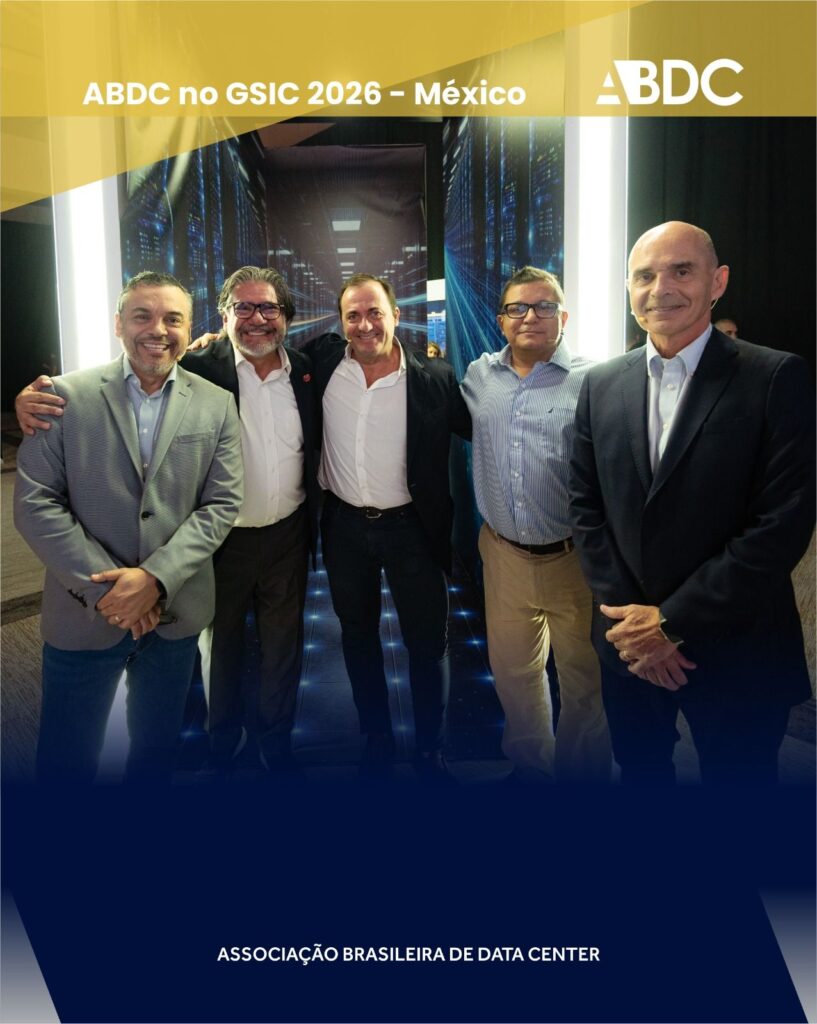
A Associação Brasileira de Data Centers (ABDC) participou do GSIC 2026, realizado no México, a convite do associado Groz Global Brands, reforçando sua atuação institucional e seu posicionamento estratégico no cenário latino-americano de data centers. A Associação foi representada por Luis Tossi, Vice-Presidente da ABDC e Diretor Comercial da Edgefy, que participou como panelista, contribuindo […]
Leia mais